Color Consistency Testing
Verifying PVD Color Accuracy
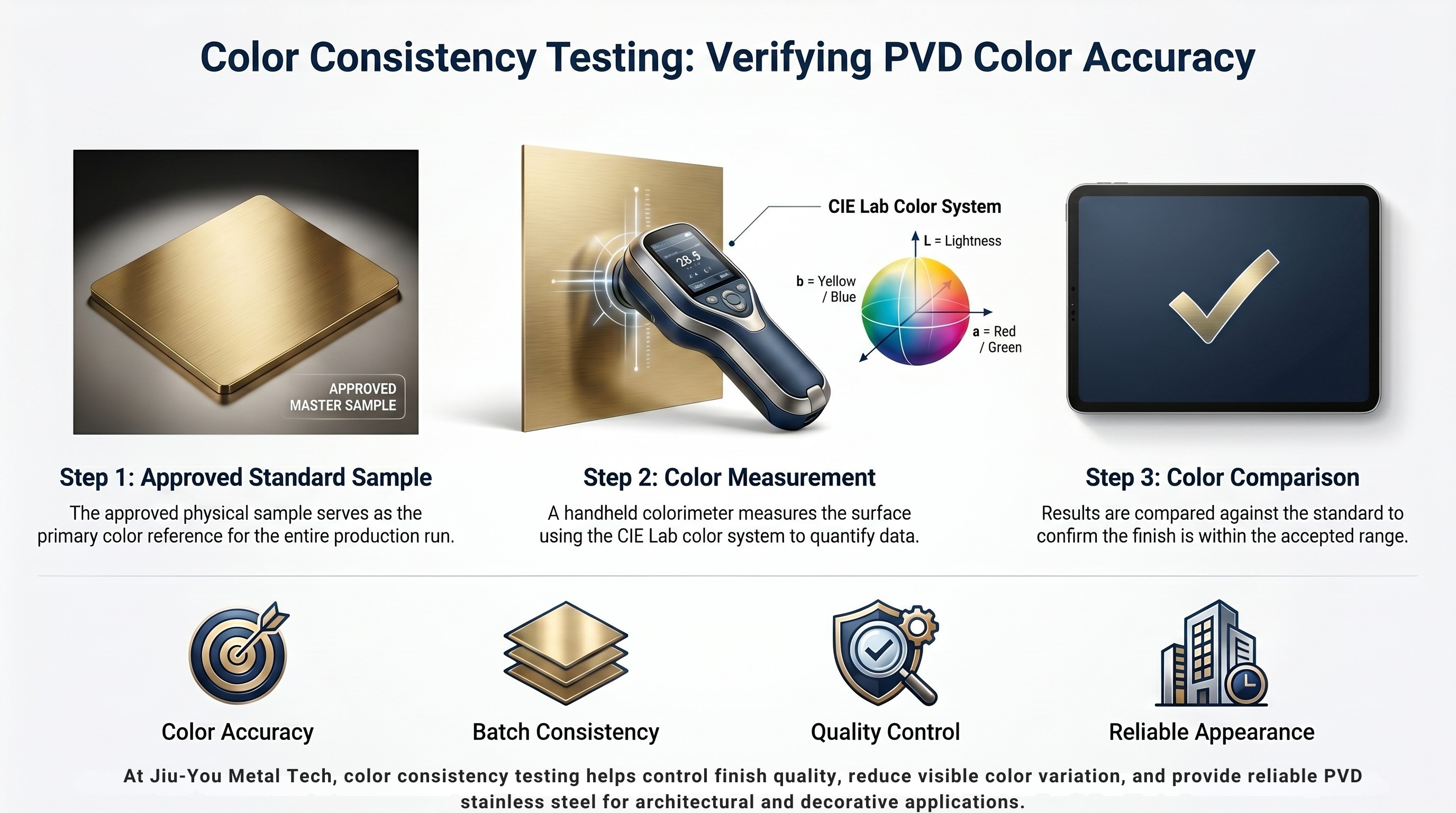
A colorimeter is used to measure the color of a finished surface and compare it with an approved standard sample. This helps us check whether the PVD color is within the accepted color range before the material is approved for shipment.
For PVD coated stainless steel, color consistency is especially important because decorative metal is often used across large visible areas such as elevator interiors, wall panels, doors, ceilings, and architectural features. Even a small color difference can be noticeable when panels are installed side by side.
During testing, the colorimeter measures the surface using the CIE Lab color system. This system measures color based on lightness, red and green value, and yellow and blue value. By comparing these values with the standard sample, we can confirm whether the finished product meets the required color specification.
At Jiu-You Metal Tech, color consistency testing helps us control finish quality, reduce visible color variation, and provide customers with more reliable PVD stainless steel for decorative and architectural applications.
CIE Lab Color Space
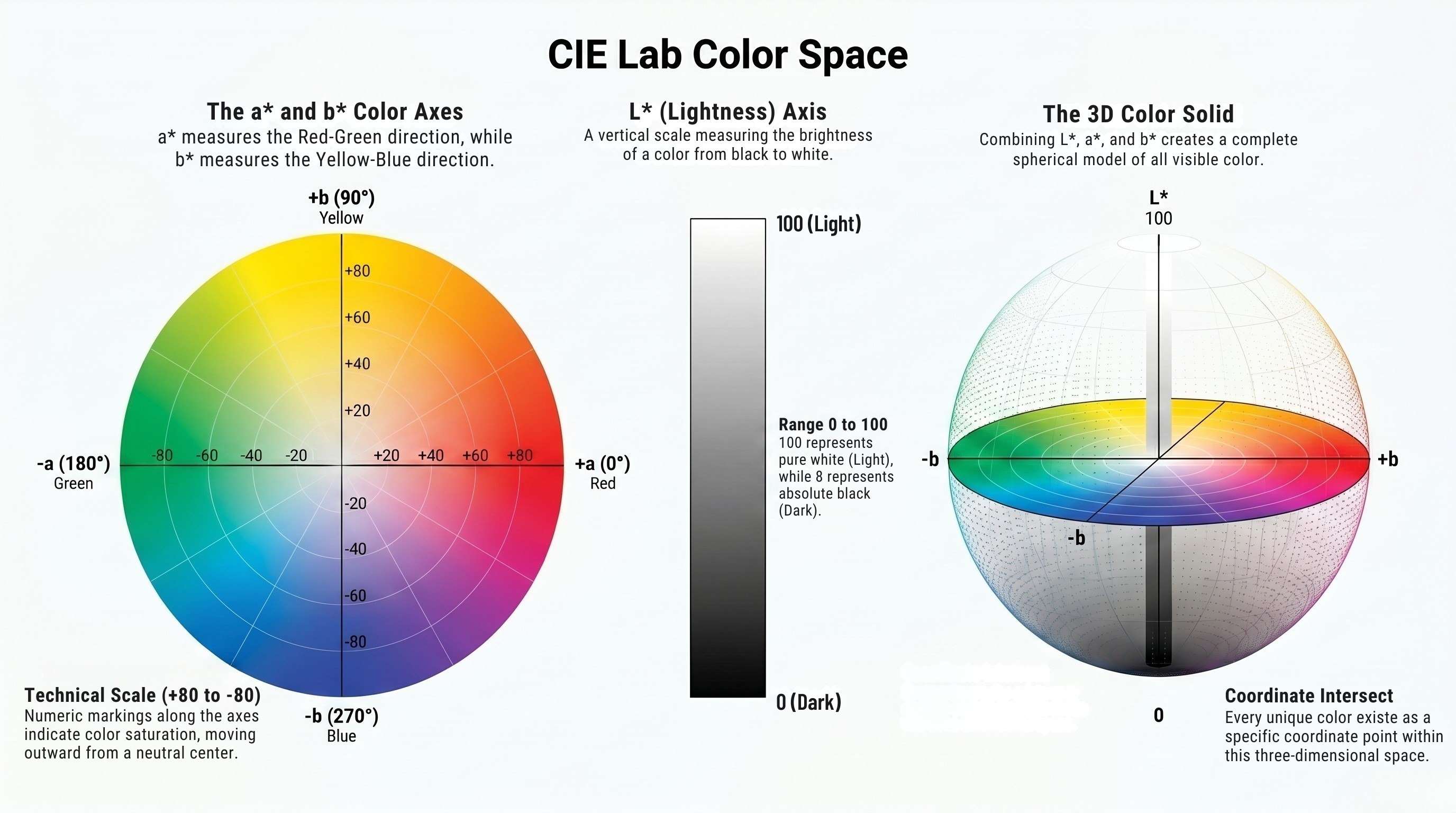
The CIE Lab color space is a standard system used to measure and describe color in a clear, consistent way. Instead of judging color only by eye, this system gives each color a numerical value that can be compared with an approved standard sample.
The infographic shows three main parts of CIE Lab color measurement:
L* measures lightness.
A lower L* value means the color is darker, while a higher L* value means the color is lighter.
a* measures the red and green direction.
A positive a* value moves toward red, while a negative a* value moves toward green.
b* measures the yellow and blue direction.
A positive b* value moves toward yellow, while a negative b* value moves toward blue.
For PVD coated stainless steel, this helps us check whether the finished color is close to the approved sample. By comparing the L*, a*, and b* values, we can identify color differences more accurately and help maintain consistent PVD finishes across production batches.
Color Difference Evaluation
When comparing two color samples, the most important value is not only the individual Lab reading of each sample, but the color difference between them. This difference is measured by a color difference meter and helps determine how closely the finished product matches the approved standard sample.
For example, if the customer’s standard sample has a Lab value of 55 / 6 / 7 and the finished product measures 58 / 7 / 8, the instrument can calculate the total color difference between the two samples. In general, when the color difference is greater than 2, the difference may become visible to the human eye.
By setting an acceptable color difference range in advance, we can compare the finished product against the standard sample and determine whether it meets the required quality standard. This helps Jiu-You Metal Tech control PVD color consistency, reduce visible variation, and ensure that finished materials are approved before shipment.