XRF Inspection
Understanding XRF Inspection
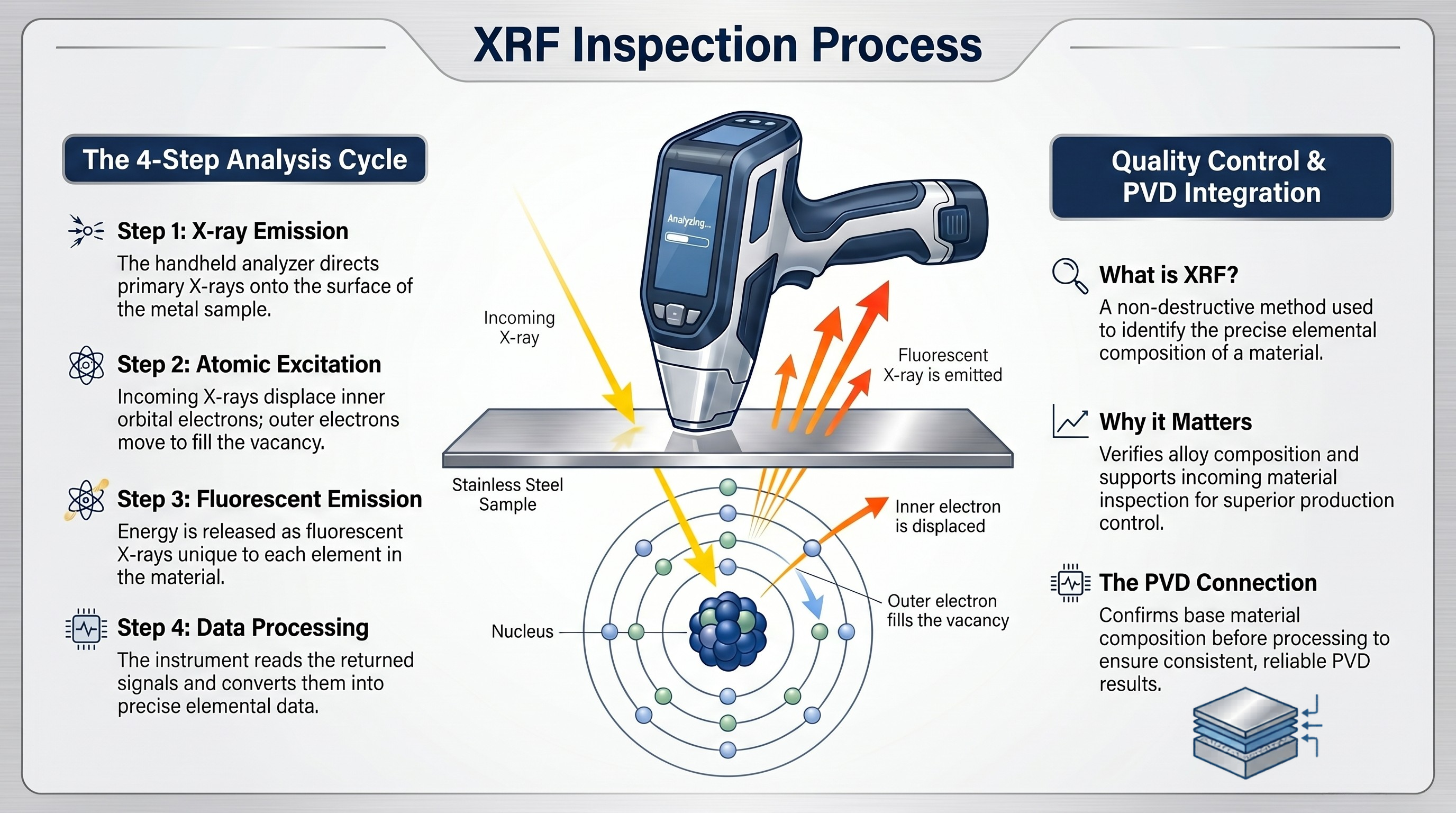
XRF, or X-ray Fluorescence, is a non-destructive inspection method used to identify the elemental composition of a material. By directing X-rays onto the surface of the sample, the instrument excites the atoms within the material and causes them to emit their own characteristic fluorescent X-rays. These signals are then measured and analyzed to determine which elements are present.
How XRF Inspection Works
Why It Matters
Each element produces its own unique X-ray signal, allowing XRF to support material identification, alloy verification, and incoming material inspection without damaging the sample surface. This makes it a useful tool for quality control in metal processing applications.
How It Supports PVD Quality Control
In PVD stainless steel production, XRF inspection helps verify the composition of the base material before processing. By confirming the elemental makeup of the substrate, XRF supports better material control, more consistent production, and more reliable final results.