UV Accelerated Weathering Testing
Weathering Test Methods
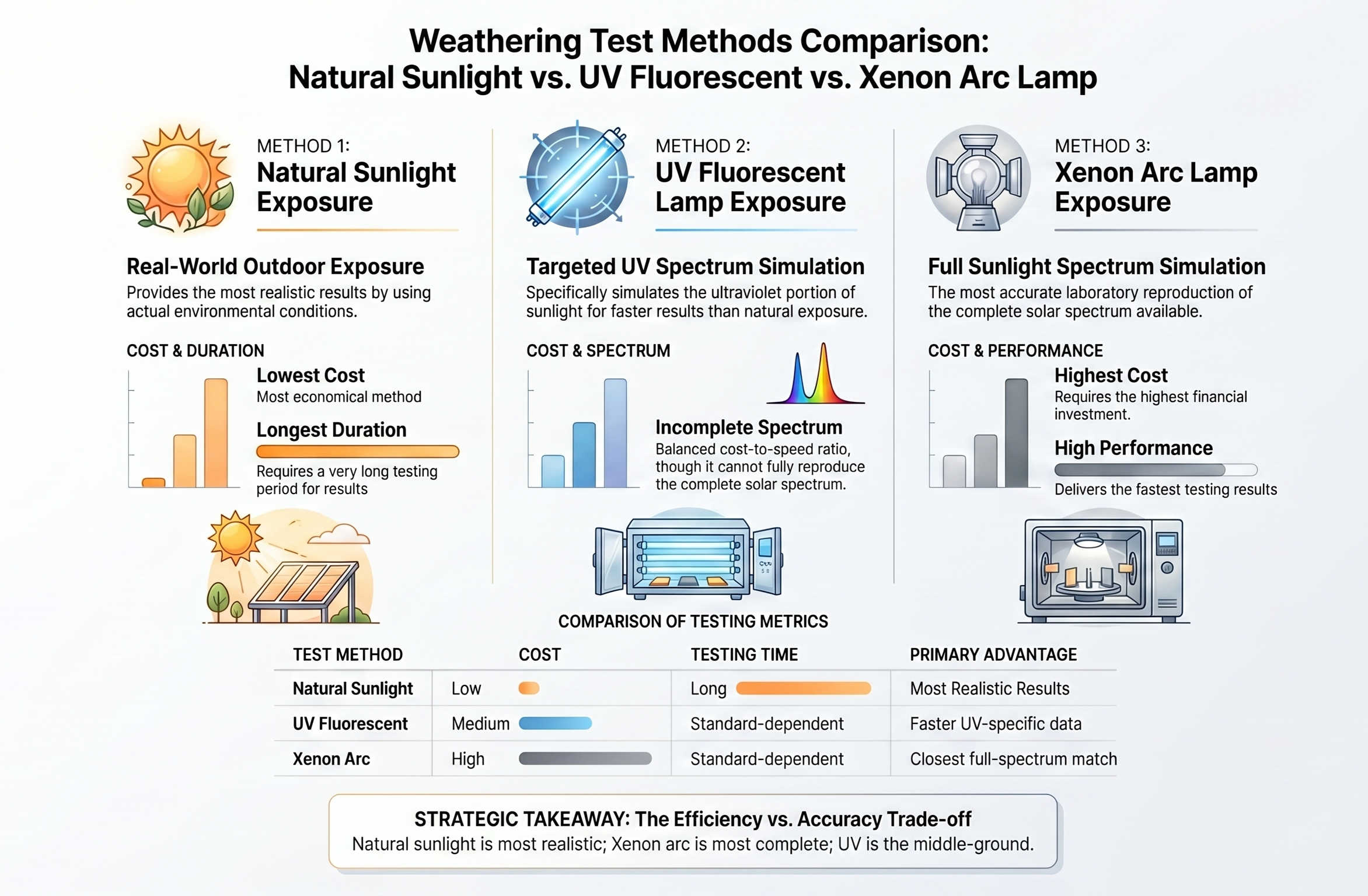
Over time, outdoor exposure to sunlight, ultraviolet radiation, heat, humidity, rain, and oxidation can cause materials to fade, lose gloss, weaken, crack, peel, chalk, or corrode. Weathering tests are used to simulate these natural conditions and evaluate long term material durability, since many of these factors occur together in real environments.
The three main methods are natural sunlight exposure, UV fluorescent lamp testing, and xenon arc lamp testing. Natural exposure offers real world results at lower cost, but it takes much longer. UV testing provides faster results by simulating ultraviolet light, while xenon arc testing delivers a more complete simulation of sunlight at a higher cost.
How UV Aging Tests Work
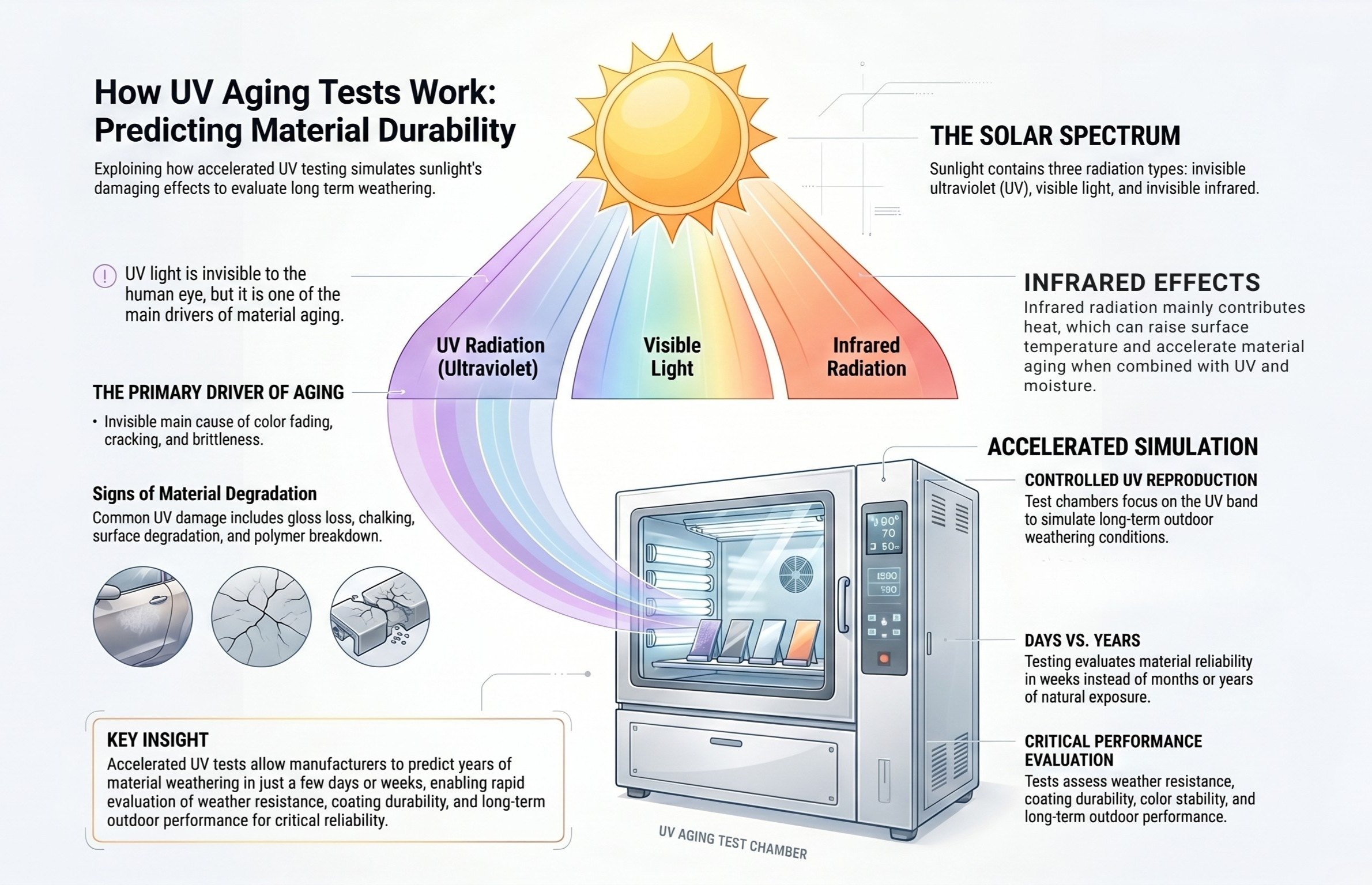
Sunlight contains ultraviolet light, visible light, and infrared light. Among these, ultraviolet light is one of the main causes of material aging, surface degradation, and color change over time. A UV aging test chamber uses this portion of the light spectrum to accelerate weathering and simulate the long term effects of outdoor exposure in a shorter testing period.
In-House QUV Aging Test Chamber
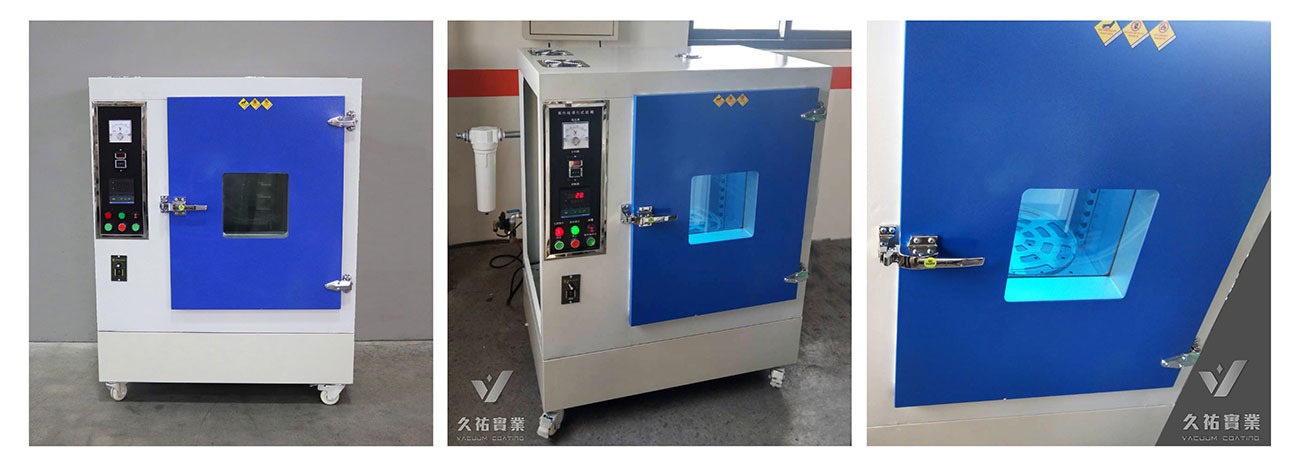
At Jiu-You Metal Tech, our QUV aging test chamber helps us evaluate how materials perform under accelerated ultraviolet exposure. By simulating the effects of long term outdoor weathering in a controlled environment, the machine supports testing for durability, surface stability, and resistance to fading, cracking, and other forms of aging.